From Throwaway Culture to Creative Reuse: Eco-Friendly Crafting Connects Sustainability and Well-Being
By: Shay
Worn-out jeans, aluminum cans, and leftover fabric are being repurposed into distinctive art pieces, stylish clothing, and unique home décor items. This growing trend highlights a passion for sustainable crafting, shifts in consumer behavior, and creative practices, while promoting mental wellness. Studies indicate that engaging in activities such as upcycling and repairing materials reduces environmental harm, cultivates mindfulness, and boosts emotional well-being.
Eco-friendly crafting is not limited to professional artists; anyone can repurpose thrifted, salvaged, or everyday household items into functional or decorative creations, turning discarded objects into something valuable. As sustainability and personal wellness attract more public attention, these practices are garnering increased interest.
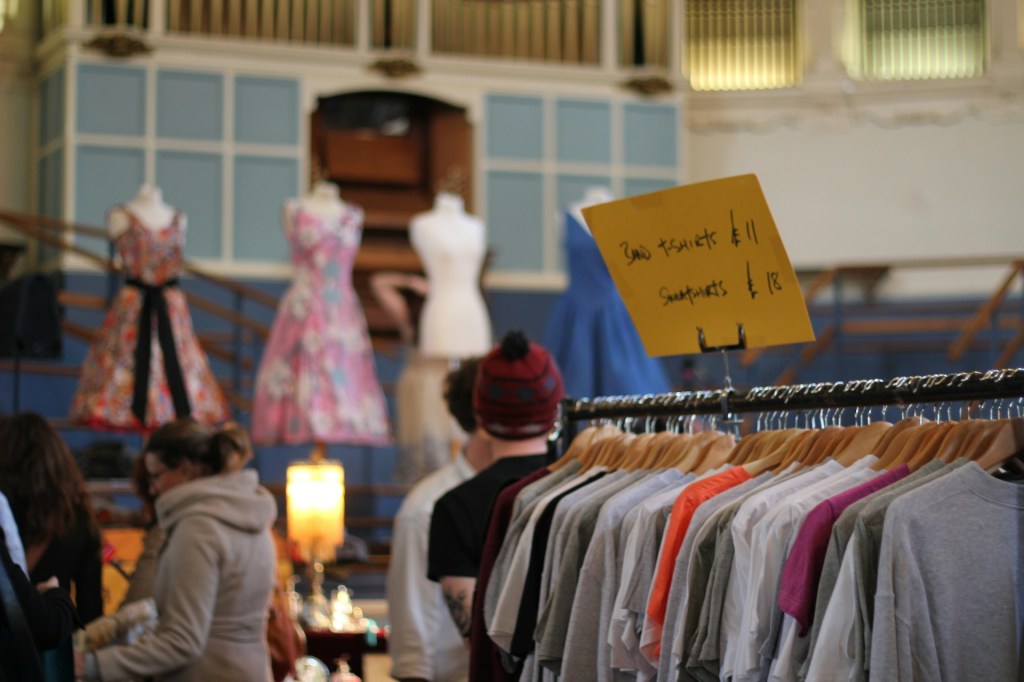
Figure 1
A clothes rack in the foreground of a thrift store, with people shopping in the background.
Credit: Chloe Evans / Unsplash (CC0)
https://unsplash.com/photos/man-in-brown-jacket-holding-blue-sticky-note-FSZnJfI-16w
From Repair Culture to Throwaway Culture
For centuries, mending and repurposing objects was a normal part of everyday life. Before the 1800s, people prioritized repairing items because resources were limited. However, after World War II, mass production made household items much more affordable. This led to a cultural shift in which people favored buying new products over repairing old ones and often associating new purchases with convenience and social status.
Advances in manufacturing technology enabled faster, cheaper production of goods. This, combined with marketing strategies like planned obsolescence—where products are designed to have a limited lifespan—led to a global “throwaway culture.” As a result, products quickly lose their perceived value, as noted by van Schilt, de Jong, and den Ouden (2021).
As this mindset took hold, repairing everyday items became less common. The result has been increased waste, heavier demand on natural resources, and a change in how materials are valued.
The Growth of Upcycling
More consumers are embracing upcycling, a creative process that involves turning old or discarded materials into new items that hold equal or even greater value. While the term “upcycling” became popular in the 1990s, the idea itself has been around much longer, as it is a necessity-driven practice throughout history.
“Upcycling enables people to transform waste materials into new products and view discarded objects as valuable resources,” van Schilt et al. (2021) wrote in their research on consumer motivations. These motivations often include cost savings and the appeal of creating something unique.
Researchers also point to a deeper connection formed through the process. “Creative upcycling reconnects people with materials and the process of making, challenging patterns of overconsumption,” Baxter, Aurisicchio, and Childs (2018) noted in their study of sustainable design.
Repurposing items that may otherwise end up in landfills allows people to reduce waste while developing practical skills and artistic expression.
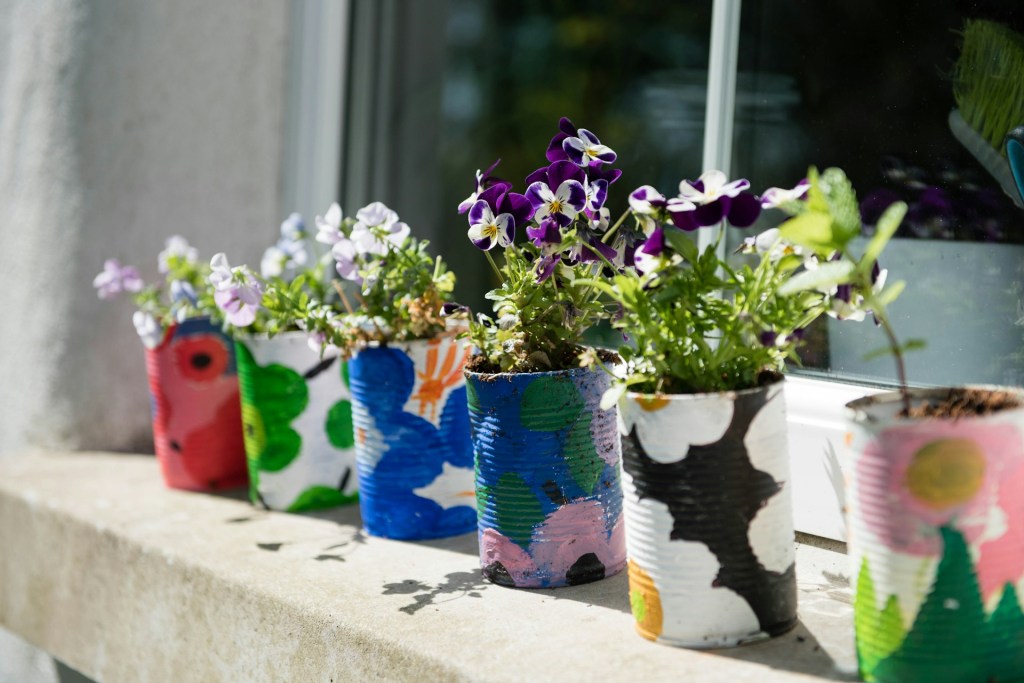
Figure 2
Flowers potted in brightly painted tin cans, sitting on a windowsill.
Credit: Julietta Watson / Unsplash (CC0)
https://unsplash.com/photos/purple-and-white-flowers-in-blue-and-white-ceramic-vase-aBZVCZnd2_Q
Environmental Benefits of Creative Reuse
Repairing or repurposing items helps decrease the demand for new manufacturing and the raw materials it requires. Even small projects, such as visible mending—which makes repairs a decorative feature—can reduce waste and conserve resources. According to the Ellen MacArthur Foundation (2017), the global textile industry creates about 92 million tons of waste each year. Much of this waste ends up in landfills or is burned. Reuse and repair help reduce textile waste.
Upcycling also supports a circular economy, which keeps materials in use for as long as possible rather than discarding them after a single lifecycle (van Schilt et al., 2021). This approach confronts patterns of fast consumption that dominate many industries.
Over time, these practices can change how materials are perceived. Things that used to be seen as disposable are now recognized as reusable or adaptable, leading to a shift in our consumption and waste habits.
Figure 3
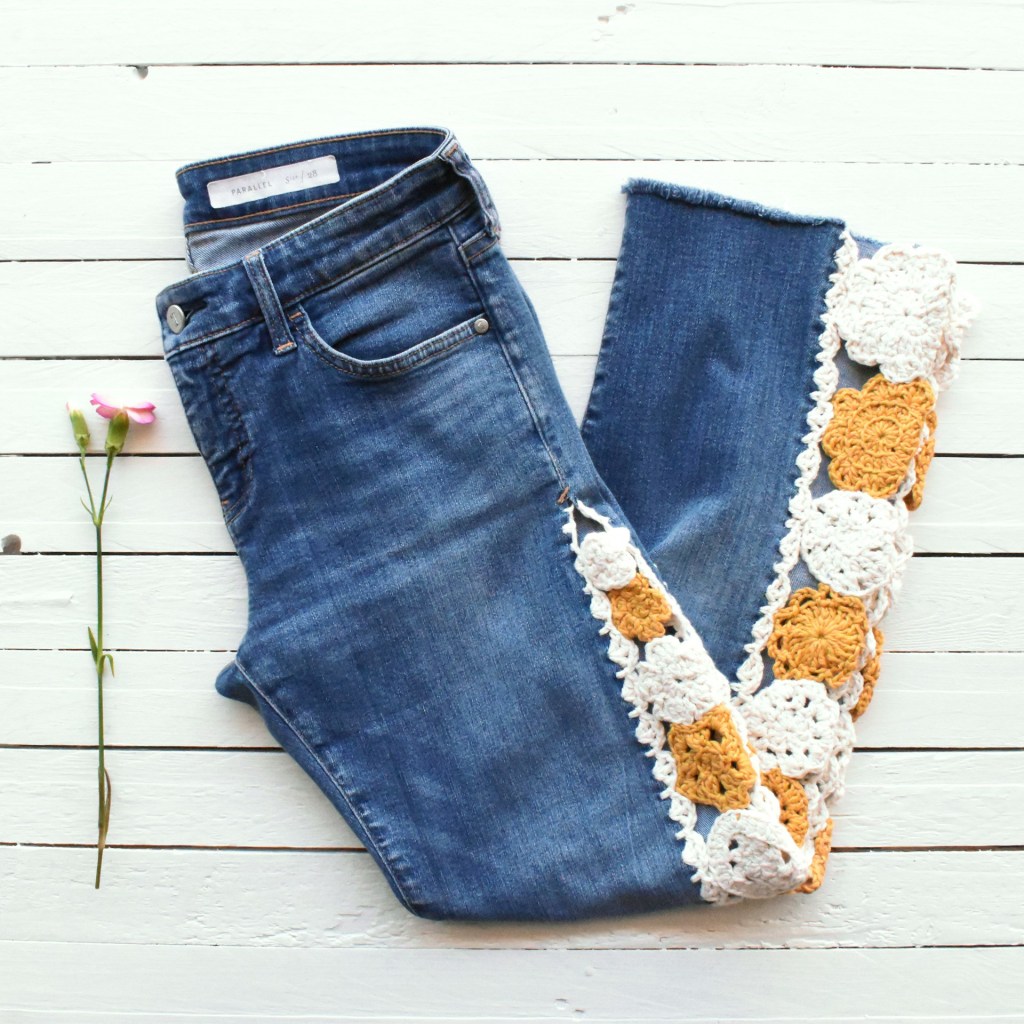
Jeans with a crocheted embellishment running down the outer seam, lying on a painted wood surface next to a flower.
Credit: Shelter / Unsplash (CC0)
https://unsplash.com/photos/a-pair-of-jeans-with-a-flower-CLwiuvrtKF4
Crafting as a Tool for Mental Well-Being
Crafting offers important benefits for mental health. When people engage in creative, hands-on activities, they focus their attention, which helps them take a break from stress and distractions.
A study by Bukhave et al. (2020) examined the benefits of craft-based interventions for mental well-being. Participants reported increased emotional well-being and improved mood. Participating in crafting activities provides a sense of structure and accomplishment, which helps nurture stability and joy.
“Those who took part in crafting activities noted lower stress levels and a rise in positive feelings such as tranquility and enjoyment,” Stevenson and Alzyood (2025) stated in their research on creative activities and well-being.
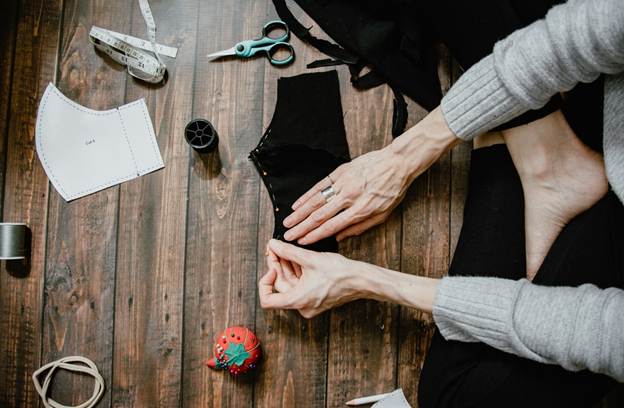
Figure 4
A person sitting on a wooden floor pinning pieces of fabric together, surrounded by sewing tools.
Credit: Kelly Sikkema / Unsplash (CC0)
https://unsplash.com/photos/person-in-black-long-sleeve-shirt-holding-red-round-ornament-4LjWS2TtmEk
Everyday Creativity and Availability
Eco-friendly crafting is an inclusive and accessible activity that utilizes low-cost or secondhand materials. By sourcing supplies from thrift stores, garage sales, and everyday household items, participants can easily obtain the resources they need, making it easier for anyone to get involved.
Research suggests that incorporating creative practices within daily routines can strengthen mental health over time. “Everyday crafting practices are increasingly recognized as meaningful forms of creativity that support health and well-being,” Loveday (2021) wrote.
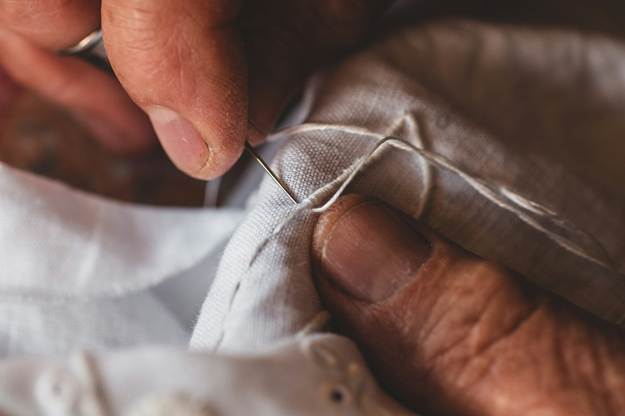
Figure 5
Fingers holding fabric while sewing with a needle and thread.
Credit: Elio Santos / Unsplash (CC0)
https://unsplash.com/photos/white-thread-5ZQn_gWKvLE
A Small Creative Act with Big Impact
Eco-friendly crafting combines sustainability, creativity, and mental well-being. Repairing and repurposing materials helps reduce waste while providing a practical, hands-on activity.
According to van Schilt et al. (2021), the motivations for upcycling often include environmental concerns, a desire for creative expression, and a resistance to consumerism. Crafting with salvaged materials is a personal pursuit and a significant cultural trend.
Thanks to community workshops, online tutorials, and social media platforms, more people have the opportunity to engage in these creative practices. Activities such as mending clothes, repurposing household items, and designing functional décor are becoming increasingly common in everyday life.
Sustainable crafting takes items that people usually throw away and turns them into valuable resources. This approach shows that small, consistent efforts can make a big difference in helping the environment and improving personal well-being.
References
Baxter, W., Aurisicchio, M., & Childs, P. (2018). Creative upcycling: Reconnecting people, materials, and place through making. Journal of Cleaner Production, 189, 803–815. https://doi.org/10.1016/j.jclepro.2018.04.137
Bukhave, E. B., Bunkenborg, G., Jensen, B. R., & Laursen, B. S. (2020). The effects of crafts-based interventions on mental health and well-being: A systematic review. Australian Occupational Therapy Journal, 67(6), 528–542. https://doi.org/10.1111/1440-1630.12666
Ellen MacArthur Foundation. (2017). A new textiles economy: Redesigning fashion’s future. https://ellenmacarthurfoundation.org/a-new-textiles-economy
Loveday, M. (2021). Well-making and making-well: Craft, design and everyday creativity for health and well-being. Journal of Arts & Health, 13(3), 227–240. https://doi.org/10.1080/17533015.2020.1769346
Stevenson, C., & Alzyood, M. (2025). Creative activities and mental well-being: A systematic review. BMC Public Health. https://doi.org/10.1186/s12889-025-22741-0
van Schilt, I., de Jong, A., & den Ouden, E. (2021). Consumer upcycling as emancipated self-production: Understanding motivations and identifying upcycler types. Journal of Cleaner Production, 278, Article 123673. https://doi.org/10.1016/j.jclepro.2020.123673
 Reclaimed Muse